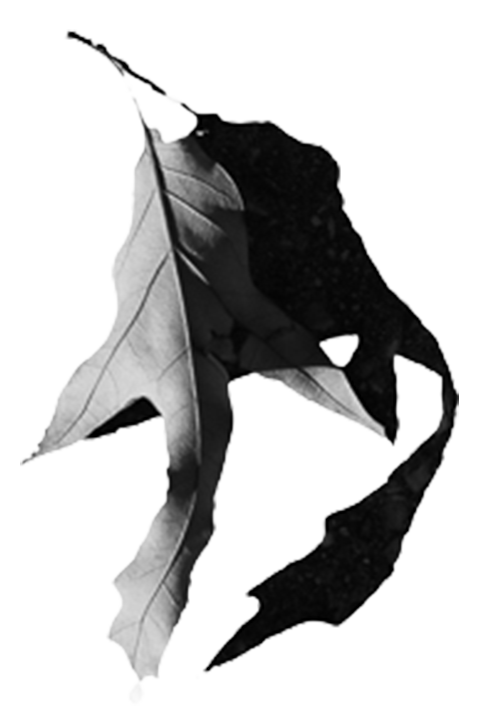
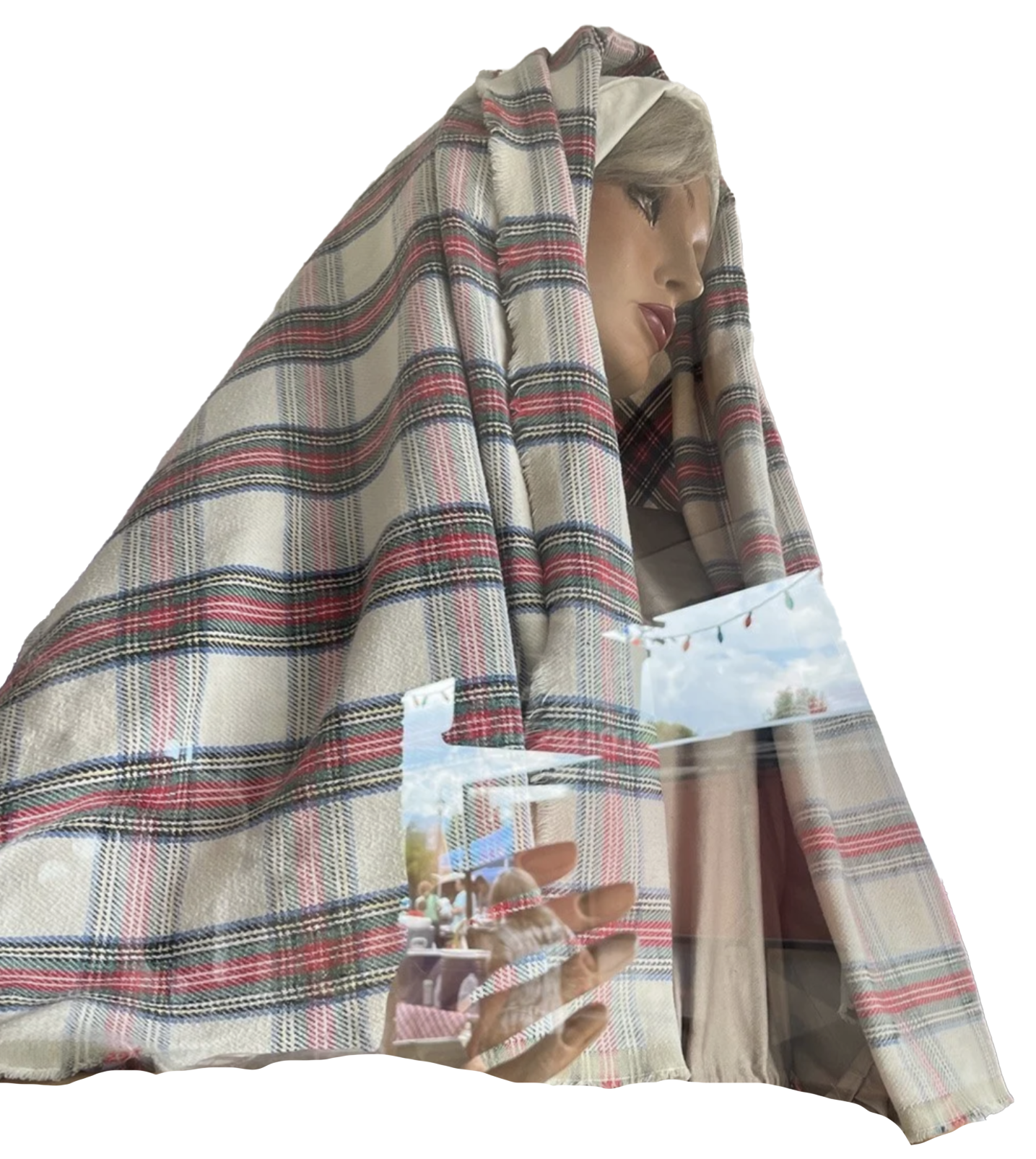
I am in love with shadows. When I walk to work in the morning I am frequently startled by the show on display, especially this time of year when the sidewalks are cluttered with fallen leaves and their shadows. I play it cool though, exhibiting great restraint by not exclaiming to people passing by “Look at that! Do you see that gorgeous shadow!”. Instead I calmly take out my phone and snap a photo.
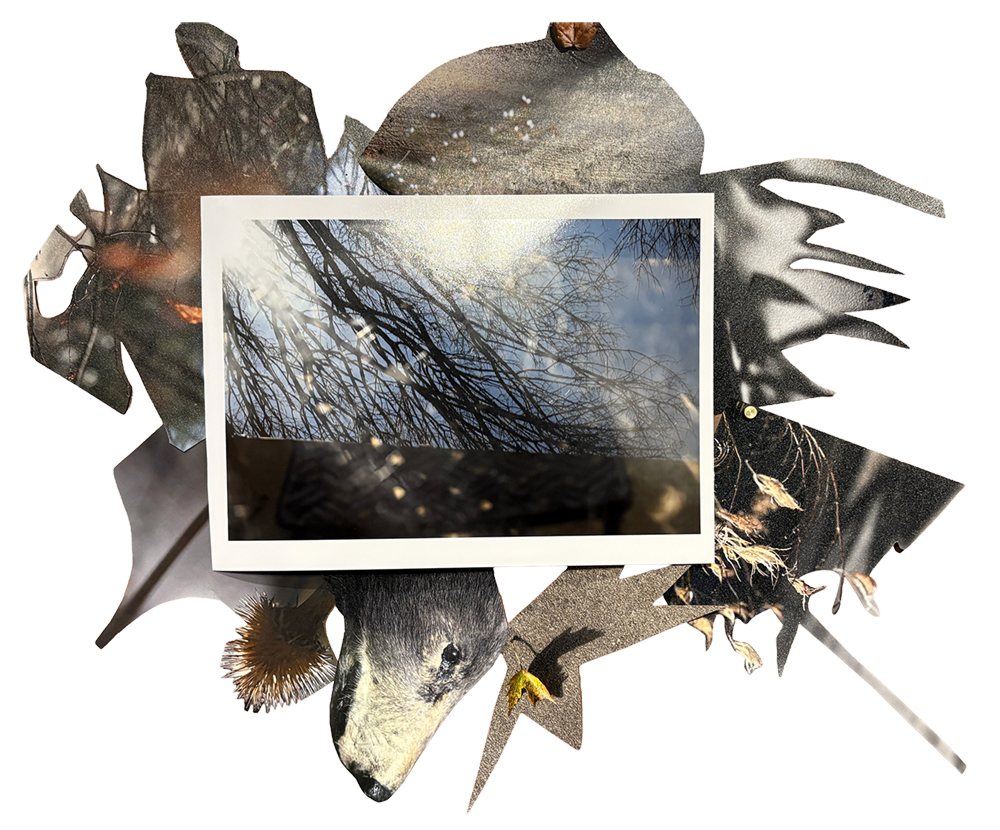
In the studio when looking at my attempts to capture these beauties what I am most struck by is how the shadow and leaf seem to combine into a third thing. An animated life form that is not just leaf or just shadow but a new more interesting creature. What other third things are we missing?
Imagination is a powerful force that we seem to be in short supply of lately. What other ways are possible? What are we unable to see because we have been so thoroughly trained to see this or that and not this and that.
I don’t know about you but I am personally ready for the third thing.
Third Thing photo series.
Being haunted draws us affectively, sometimes against our will and always a bit magically into the structure or feeling of a reality we come to experience, not as cold knowledge, but as a transformative recognition.( Gordon, Avery. Ghostly matters: Haunting and the sociological imagination. Minneapolis: University of Minnesota Press, 2011.)
The photographs, paintings, and collages in What Light Knows are the result of a three year collaboration with nine ghosts; nine women who died in the Highland Hospital fire in 1948. Each of them were sedated and locked in their rooms at the time of the fire, deemed “unfit or wonderers”. Highland Hospital specialized in treating people who had been diagnosed with hysteria or what was then called nervous disorders. These diagnoses were frequently assigned to outspoken women with inconvenient opinions or passionate emotions.
The collaborations began with long exposure photographs shot at the former sight of Highland Hospital, located less than a mile from my home in Asheville, North Carolina.
I would shoot the images intuitively, often not viewing what had been captured until returning to my studio. The images were not always beautiful but they did always surprised me.
The strange animated light forms in the photographs compelled me to start creating collages and painting – a practice I have not engaged with for over 10 years. The expressive wildness in the photographs encouraged a wildness in my mark making and pallet choices.
This body of work is an invitation to ask stranger questions, observe what may seem to be invisible, and acknowledge the many ways we are haunted.
I am grateful to my collaborators: Miss Janice R. Borochoff, Miss Marthina DeFriece
Mrs. Jules Doering (nee Mildred Belton), Mrs.Ida Engel (nee Ida Levi), Mrs. F. Scott Fitzgerald (nee Zelda Sayre), Mrs. Allen T. Hipps (nee Sarah Neely), Mrs. Virgina W. James ( nee Virginia Ward), Mrs. W. Bruce Kennedy (nee Ethlyn Avirette), Mrs. Gus C. Womack (nee Martha Oma Thompson).
Float
Spoken word poem, This Story Begins, and slideshow of images from What Light Knows, performed by Anna Helgeson
There is a rock in western North Carolina surrounded by fences and interpretive signs.
Located on unceded Cherokee land, Judaculla Rock is the largest petroglyph in the eastern United States with over 1,000 symbols carved into the flat soapstone surface.
I first experienced Judaculla Rock in 2017, on the afternoon of the total lunar eclipse, two weeks before my 40th birthday, standing on a hill above the rock as day became night. Maybe it was the impact of suddenly being surrounded by stars or my renewed awareness of mortality but I felt something I can only describe as magic on that day, in that spot.
When I returned a few months later I was struck by the interpretive signs, fences, and walkways - all designed to frame and situate my encounter in a particular way; a way that privileges the written word, preservation, and private property. Whose knowledge makes a place knowable? Whose boundaries matter?
Is there a way to show the magic I feel present without redoubling the hegemony these interpretations imply?
This sci-fi adventure found in the Free Little Library near Judaculla Rock
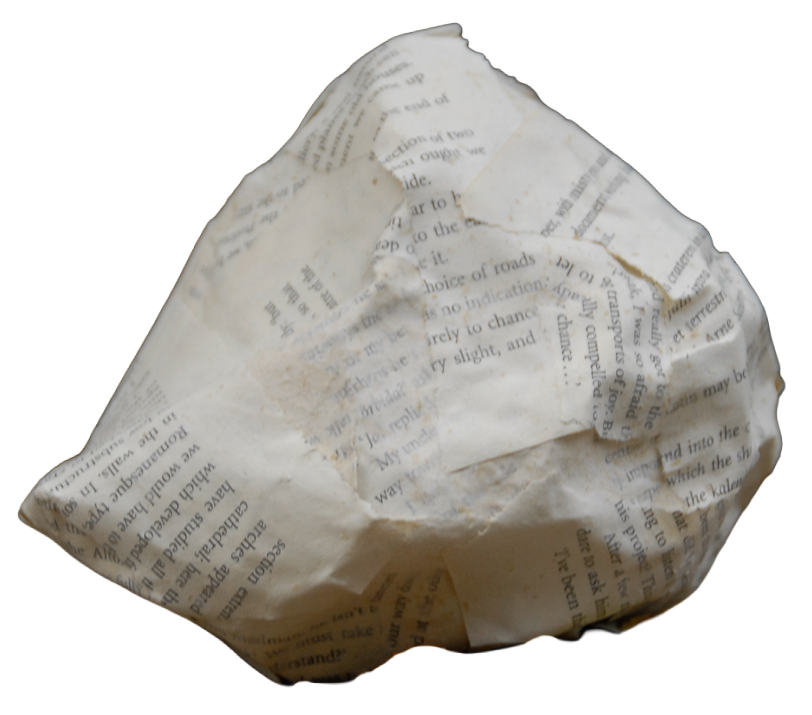
Install shot from Holden Gallery, Warren Wilson College Faculty Show, Spring 2022. Photographs from Judaculla Rock with papier mache rocks created from a shredded copy of Journey to the Centre of the Earth
Install shot from Holden Gallery, Warren Wilson College Faculty Show, Spring 2022. Photographs from Judaculla Rock with papier mache rocks created from a shredded copy of Journey to the Centre of the Earth.
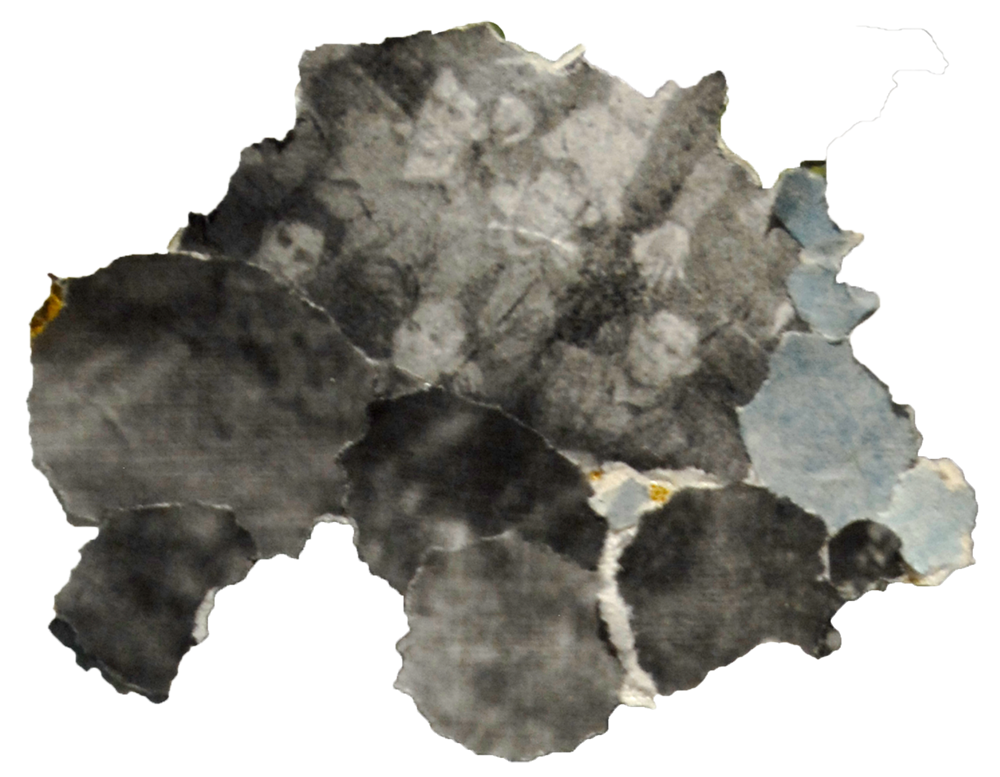
This photo collage is composed of hand torn photographs. The original photographs are from a series of images I took while exploring a trail in northern Georgia, named Ware Women Dell. The trail was created and maintained by the Civilian Conservation Corps stationed there in the 1930s-1940s. Along the trial are signs with photographs of this motley group of workers. How many of these men found liberation in these male only work groups and developed relationships with each other? I took many photographs of this photograph zooming in on specific coded gestures; a sly smile, a too close hand next to hand. I am surely inserting my own queer longing for more historical representation, but doesn't history always have a bit of personal speculation?
Detail from Queer Speculations
Photo collage from photographs, photocopies, text, from CCC sign at War Women Dell.
Racial identities are not only Black, Latino, Asian, Native American and so on; they are also white. To ignore white ethnicity is to redouble its hegemony by naturalizing it. - Coco Fusco
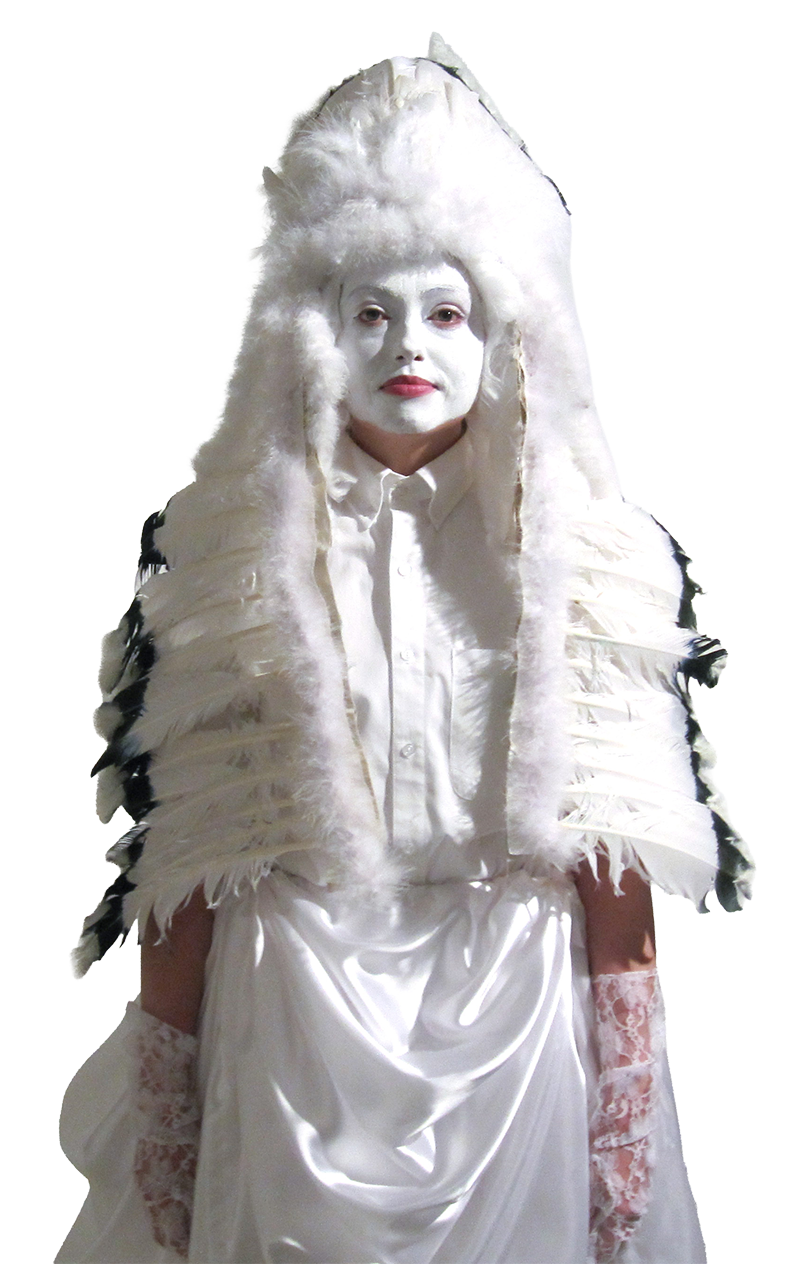
Since 2009 I have been performing in various contexts as a character named Whitey. Whitey is my attempt to denaturalize my own whiteness and point to the absurdity and maintenance of race.
Invented as a way to visually separate classes of workers in colonial informed capitalism, race continues to be performed and reified daily.
It is my sincere hope that these performances contribute to the legacy of resistance and solidarity humans have bravely participated in for millennia.
Whitey Honors Zebulian Vance
This Whitey performance was part of a 2019 event, Revolve: Now at the Asheville Art Museum.
Maybe it was too easy to focus on the giant phallic symbol built by the Lost Cause confederates to honor the slave-owning, civil war general and two time North Carolina mayor Zebulian Vance.
I was assigned a window overlooking Pack Square with a window framing the towering symbols of white power. The Vance Monument is part of the urban landscape in Asheville, located in the center of downtown at the edge of Pack Square, a meeting place, a point of reference.
My character, Whitey, is intended to make obvious the construction and maintenance of whiteness. I started this project in 2007 and since then Whitey has performed in many places for various reasons.
Whitey is intended to signal the absurd, mash up of cultural appropriation, racial invention, and blindness created and maintained as a way to maintain class and labor divisions in our exploitative economic system.
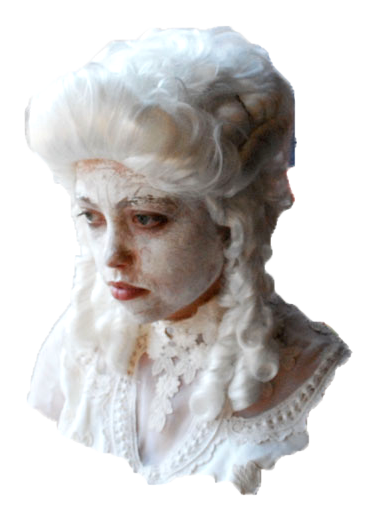
For Whitey Honors Vance Whitey wore a pure white dress with an enormous bustle and Kente cloth belt to signal the 19th Century European scramble for Africa, a MAGA necklace, and a large “Indian” head-dress - created by and for non-native people as a costume, over an Imperial white wig. She carries a gold plated money gun to shoot at the crowd dollar bills with Zebulian Vances face as a simultaneous act of violence and capitalist love.
Lincoln’s Licorice Lads and Lassies: To augment your refreshment schedule, it is suggested that you pass around little men and women made of black gum drops, a fitting gesture in view of the thousands of men, women and children liberated by the Great Emancipator.
-The Year Round Party Book: games riddles decorations and recipes for every red letter day! By William P. Young and Horace J. Gardner (1936)
In this quote, clearly written by, and intended for, white people we are reminded of the heroism of the Great Emancipator, and not the heroism of the nameless freed slaves themselves. The humanity of the “freed slave” is further trivialized by the act of creating hundreds of black licorice people for a party of white folks to devour. Though this book was written in the mid 1930s, and clearly many things have changed since then, racial hierarchies are still maintained through myriad casual “suggestions” that imply positions of heroism, neutrality and authority.
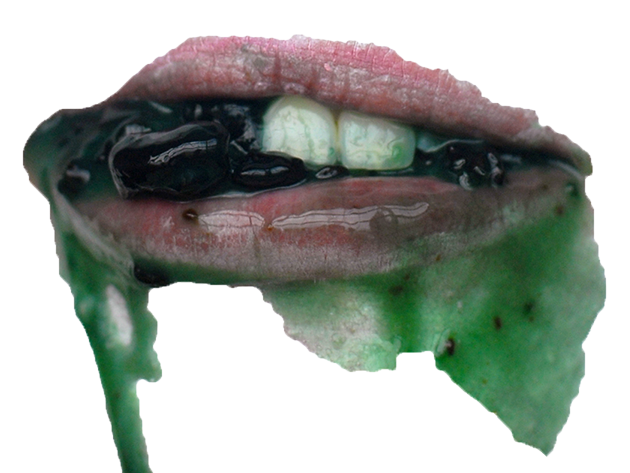
Inspired by the absurdity of this suggestion, the character Whitey reenacts, with exaggerated zeal, the activity of eating the little men and women made from black licorice. As she chews her mouth overflows with the fluid of masticated men, women and children, dripping onto her clothes, the table in front of her and eventually the floor.
Whitey is a character created to denaturalize whiteness and draw attention to the construction of racial identity by applying whiteface, wearing a white Imperial wig, and dressing entirely in white.
Emancipation Drip is a performance about the construction of race in American and is part of the ongoing Whitey Series by artist Anna Helgeson. This image is a still from the performance.
Emancipation is a performance about the construction of race in American and is part of the ongoing Whitey Series by artist Anna Helgeson. This image is a still from the performance.
Lincoln’s Licorice Lads and Lassies: To augment your refreshment schedule, it is suggested that you pass around little men and women made of black gum drops, a fitting gesture in view of the thousands of men, women and children liberated by the Great Emancipator.
-The Year Round Party Book: games riddles decorations and recipes for every red letter day! By William P. Young and Horace J. Gardner (1936)
In this quote, clearly written by, and intended for, white people we are reminded of the heroism of the Great Emancipator, and not the heroism of the nameless freed slaves themselves. The humanity of the “freed slave” is further trivialized by the act of creating hundreds of black licorice people for a party of white folks to devour. Though this book was written in the mid 1930s, and clearly many things have changed since then, racial hierarchies are still maintained through myriad casual “suggestions” that imply positions of heroism, neutrality and authority.
Inspired by the absurdity of this suggestion, the character Whitey reenacts, with exaggerated zeal, the activity of eating the little men and women made from black licorice. As she chews her mouth overflows with the fluid of masticated men, women and children, dripping onto her clothes, the table in front of her and eventually the floor.
Whitey is a character created to denaturalize whiteness and draw attention to the construction of racial identity by applying whiteface, wearing a white Imperial wig, and dressing entirely in white.
I’ve been working on a photo series in response to a Kinship Photography prompt connected to the Bartram trail. William Bartram (b. 1739) was the son of a wealthy botanist in New England who, after failing in several business ventures decided that all he really wanted to do was walk through the woods and draw/write about what he saw. I can relate. Alas that sort of freedom is still only afforded to the whitest, wealthiest, and most testosterone saturated among us.
The Bartram trail is long and traverses through eclectic terrain including though at least one small town; Franklin, North Carolina. I started my Franklin journey at Nikwasi Mound, built over 1,000 years ago by Cherokee people and still considered a holy site by the nearby Eastern Band of Cherokee Indians. It is now surrounded on all sides by small town sprawl; parking lots, gas stations, a CBD dispensary, a U-Haul rental facility, and a farm to table cafe. I spent over an hour circling this small mound. When it came time to continue my Bartram trail journey I had the choice to either venture towards a greenway along the Little Tennessee River that no doubt provided visitors with ample natural beauty; trees dripping in picturesque kudzu, sunlight twinkling through the full leaves of summer trees but instead I found myself most drawn to the kitschy splendor of downtown Franklin. There I discovered among other things; a gem store/museum full of treasures that white men found on stolen land then claimed as their own (arrowheads, stone pipes…), an antique shop spilling over with generations of things people had to have and then had to get rid of, a Scottish tartan museum, and a history museum with confederate soldier figurines, nineteenth century medical equipment, and a large display case containing a Nazi Flag and a Japanese flag – both captured during WWII by American soldiers.
I grew up in a small town and I have complicated feelings about them (and of course not all small towns are the same). But what I am usually struck by now is how many reminders there are about how to be a good, straight, white person. Whiteness was a cruel invention and requires ongoing maintenance to survive.
Cooking and Cleaning in the Shadows: The Speculative Diaries of BMC cook, Cornelia Williams. An installation created for Black Mountain College Museum and Art Center’s 2022 ReHappening with collaborator Lori Horvitz.
Despite countless exhibitions, journal articles, and documentaries made about Black Mountain College, one person has been consistently overlooked; cook Cornelia Williams. In 1947, Williams, an African-American woman, was hired to join her husband George to cook for the college. They lived on campus and were encouraged to take classes.
In an unpublished poem, Charles Olson quoted Williams’ comment, “From many there are one.” Did Olson understand what she meant? Could she have meant that from many artists at the time, there is only one—the white male as a stand in for the universal artist?
Might she have been the creative force behind some of the work produced at BMC at this time? William Triechler, a former BMC student, remembers George Williams’ meat pies and casseroles. He writes, “George experimented with food coloring to serve brighter entrees,” and asks, “What’s wrong with culinary food studies?” Yet can we be sure that Cornelia wasn’t the mastermind behind these and other more artistic curiosities?
As a way to honor the creative labor done by all women working in the shadows of men, behind the (metaphorical) kitchen door we will speculate/recreate Cornelia’s kitchen, a vibrant and inspiring place where creativity thrived not in spite of, but because of its darkness.
Sylva, North Carolina